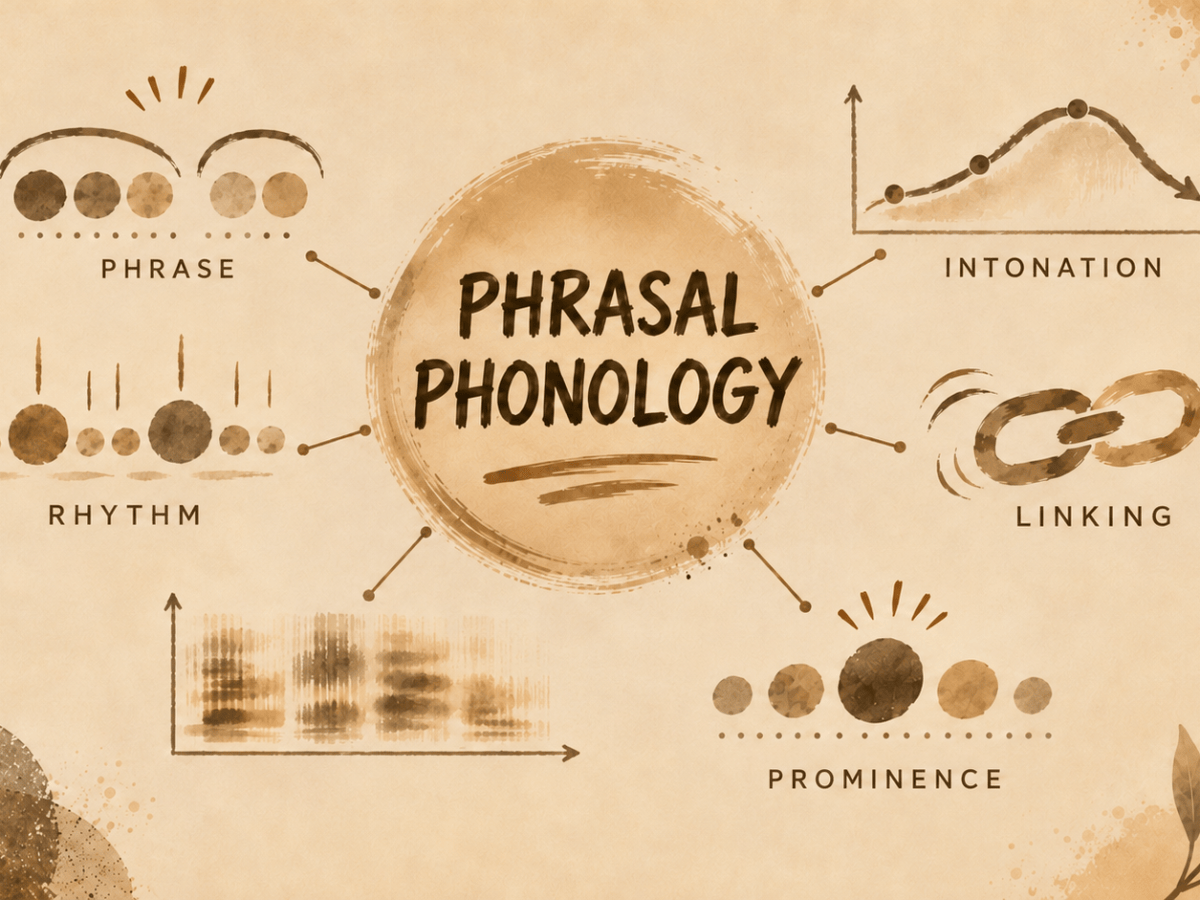
Dirnang: Phrasal Phonology
The previous chapter dealt with the phonology of words, but the accentual phrase is also an important phonological unit in Dirnang, characterised by final stress, non-final reduction, and sandhi-based schwa deletion. The Domain The domain of these processes is the accentual phrase (AP), which largely aligns with many smaller syntactic phrases. The preference tends to…
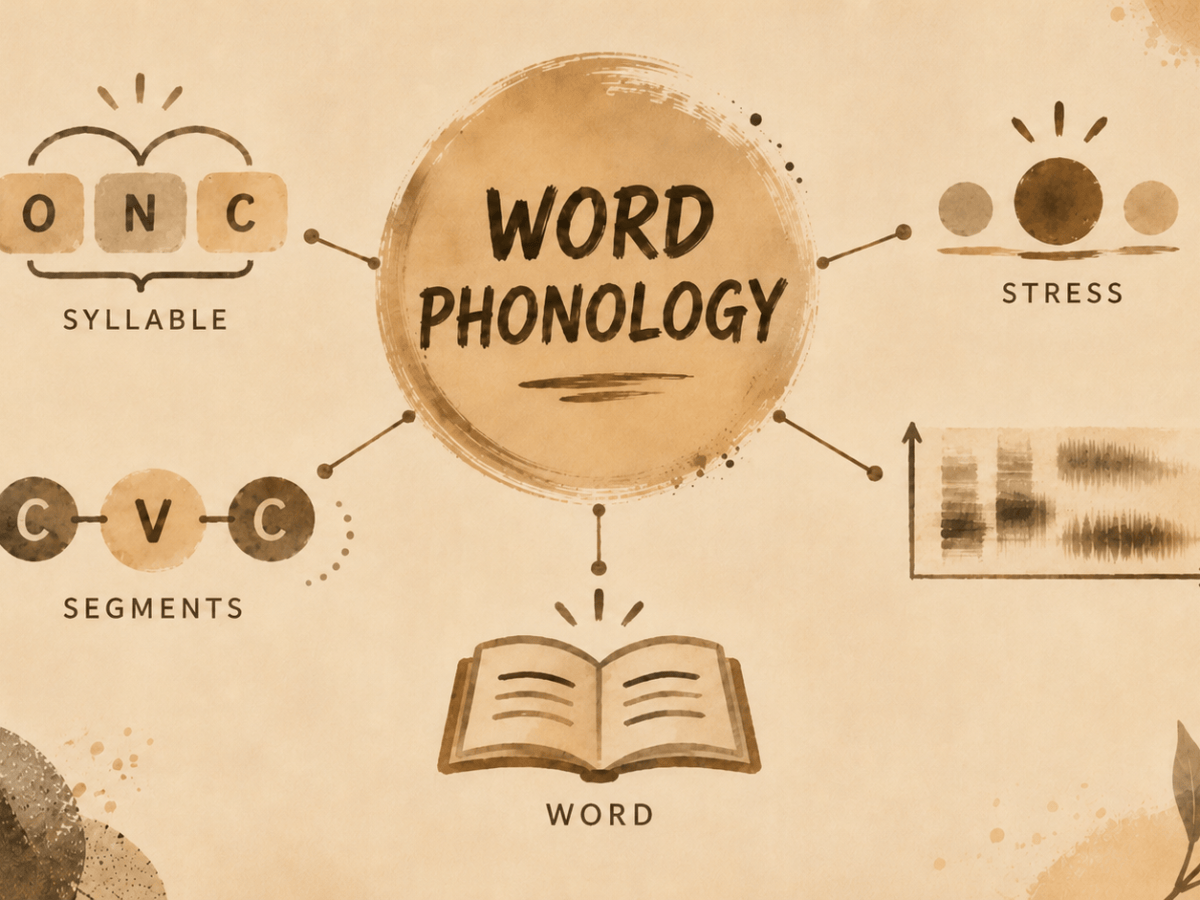
Dirnang: Phonology of the Word
Consonant Phonemes The consonant phonemes of Dirnang are given in this table. Manner Peripheral Coronal Bilabial Velar Apical Laminal Plain Rounded Plain Rounded Alveolar Retroflex Palatal Voiceless Obstruent p pʷ k kʷ t ʈ c Prenasalised Obstruent ᵐb ᵐbʷ ⁿg ⁿgʷ ⁿd ⁿɖ ⁿɟ Nasal m mʷ ŋ n ɳ ɲ Lateral l ɭ ʎ…

Dirnang Verb Phrase Structure
Note: this text was originally written in LaTeX and then converted using an LLM to HTML for WordPress. I apologise for any formatting errors. Other than that, I used ChatGPT for review and error spotting purposes and to generate the featured image, but I wrote the original text. Additional context: the language I am designing…

Verbal Morphology in Dirnang
Full disclosure: I wrote this myself without AI assistance as a LaTeX document (since I create pdf grammars using LaTeX), but I did use ChatGPT to do the format conversion from LaTeX to WordPress compatible HTML. I also used ChatGPT to generate an image to go with this article. The most complicated element of the…

Independent Verbs In Dirnang
1. Introduction My current conlang, Dirnang, returns to a long-term obsession of mine with languages with small systems of finite verbs. In this post, I want to describe the semantics of the verb class I’ve settled on. Some readers may not be familiar with such languages, but they are common in certain corners of the…
Perfectives: Beginnings and Endings
There’s something I’ve found interesting about the semantics of perfectives in different languages, but which I don’t think is mentioned very often or paid much attention in general writing on aspect. Specifically, it’s about the interaction of perfective aspect with telicity, and the extent to which the meaning of a perfective clause depends on the…
Non-Recursive NPs
I recently read Foley’s grammar of Yimas, and I wanted to share one particularly interesting aspect of it. I’ve got a pretty worn copy of Foley’s The Papuan Languages of New Guinea, which I’d strongly recommend for an overview of the region’s languages, and I’ve always found him to be very good at simple, readable,…
Why Noun Sandwiches?
This post is a bit chain of thought, so apologies if it doesn’t quite reach a firm and justified conclusion. It’s another indirectly conlanging related one… Ch’ubmin so far also has incorporated nouns sandwiched between the coverb and verb root, but I’m still not sure why that’s the “right” position for them. The next topic…
Light Verbs Two: Electric Boogaloo
This post follows on from my previous post on light verbs and classifier constructions in Algonquian and Australian languages. For my current project, I’m very interested in which non-semantically empty light verbs different languages use, especially languages with small and/or closed verb classes. By non-semantically-empty, I mean those languages where the choice of light verb…
Word Order Indecision
I’ve spent the last couple of weeks stuck on the main clause word order principles for Ch’ubmin (my current conlang). Ch’ubmin is a synthetic language, mostly verb-initial, with polypersonal agreement and incorporation, and somewhat inspired by Mayan and some other native North American languages. The thing I’m most certain of is the function and structure…
Something went wrong. Please refresh the page and/or try again.
Follow My Blog
Get new content delivered directly to your inbox.

